ARIS Cosmetics · Manufacturing perspective · 19 November 2026
For years, color has been one of the most visible ways to differentiate makeup: new shades, seasonal palettes and signature colors help brands build recognition. Yet color is only one part of the product experience. Consumers also notice how a formula feels during application, how it spreads, how it settles and what finish it leaves behind.
This is why texture deserves a place earlier in product planning. A familiar shade can feel very different in a jelly, cream, velvet, dewy or soft-focus format. For brands developing their next lip, face or eye product, texture can become a practical product-design decision—not just a marketing adjective.
From color competition to texture experience
Texture is more than the look of a swatch. It includes several connected attributes:
- Structure: whether the product is a liquid, cream, balm, powder, gel or another format.
- Application: how it picks up, spreads, blends and layers.
- Finish: whether the result appears glossy, dewy, satin, velvet, matte or soft-focus.
- After-feel: how the product feels after application, including comfort, tackiness, slip and residue.
- Performance: how the formula wears and behaves under its intended conditions.
These attributes interact. A glossy finish does not automatically mean a lightweight feel; a soft-matte finish does not automatically mean a dry feel. The development brief should describe the complete experience rather than rely on a single trend word.
Where texture-led development can create opportunities
01 · Lip: glossy, jelly and velvet
Lip products offer a wide range of texture directions, from clear and tinted oils to balm-like gloss, soft mousse and velvet finishes. Brands can explore how shine, color payoff, spreadability and after-feel work together.
02 · Face: cream, jelly and skin-like
Blush and complexion products can be developed around different application experiences: a flexible cream, a translucent gel, a serum-like fluid or a finely milled soft-focus powder. Each needs category-specific performance targets.
03 · Eyes: shimmer, wet-look and soft matte
Eye products can use texture to shape the appearance of dimension: fine shimmer, reflective finishes, cream-to-powder concepts and soft matte effects. Particle selection, adhesion and application control are important.
04 · Hybrid and transforming concepts
Concepts such as balm-to-oil or other texture transitions can create a distinctive user experience. They also require more careful formulation, stability, package and scale-up assessment.
What brands should define before requesting a custom texture
A clear brief helps an OEM/ODM manufacturer evaluate feasibility sooner. Instead of asking only for “a jelly blush” or “a lightweight foundation,” specify:
- Product category and target user: lip, face or eye; intended market and positioning.
- Reference experience: a physical benchmark, swatch, photo or written description. References guide discussion but do not imply a copy of another brand’s formula.
- Application method: finger, brush, doe-foot, cushion, sponge or another applicator.
- Desired finish and after-feel: gloss, satin, velvet, soft matte, low tack, slip or other measurable preferences.
- Color and coverage: sheer, buildable or high coverage, plus shade references where relevant.
- Packaging and target cost: container, applicator, fill volume, target price and expected order quantity.
- Target-market requirements: destination market, claims, ingredient restrictions and documentation needs.
Texture innovation must be manufacturable
A striking laboratory sample is only the beginning. Before a new texture is ready for commercial production, the development team should evaluate the formula and its intended package together.
| Development checkpoint | Questions to resolve |
|---|---|
| Formula structure | Is the texture repeatable? Does it remain uniform? Are there risks of separation, sweating, settling or unwanted changes? |
| Application and finish | Does it spread, blend, set and wear in the way the brief describes? |
| Packaging compatibility | Can the package dispense the formula consistently? Are there leakage, clogging, swelling or material-compatibility concerns? |
| Stability and quality | Do the planned stability, microbiological and other applicable tests support the intended product and market? |
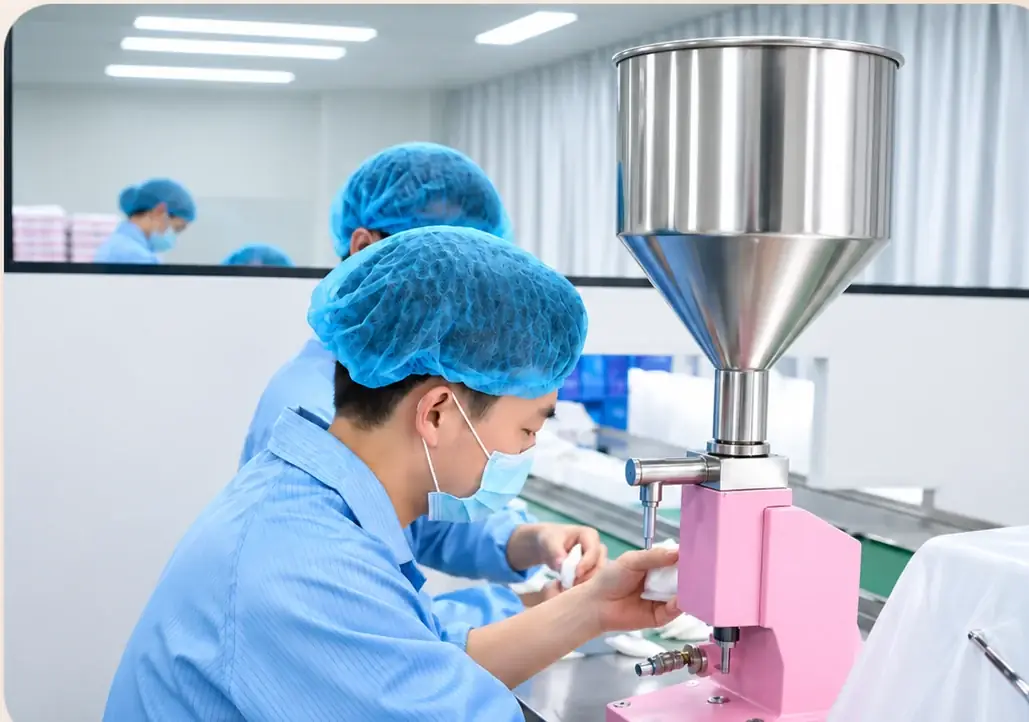
| Scale-up | Can the mixing, filling, cooling, pressing or other process be controlled at production scale? |
| Commercial fit | Can the formula, package, MOQ and target cost work for the brand’s launch plan? |
The right test plan depends on the product category, formula, package and destination market. No single test condition or production process should be assumed to fit every texture.
ARIS is building a texture-focused development roadmap
As part of its product-development planning, ARIS is organizing an initial texture innovation roadmap across lip, face and eye makeup. The proposed concepts include jelly and velvet lip formats, gloss-balm hybrids, cream and jelly blush, soft-focus powder, serum-like complexion products, and selected shimmer and soft-matte eye textures.
The roadmap is intended to connect four workstreams: texture and formula exploration, packaging matching, quality and manufacturability evaluation, and customer feedback. Concepts will move forward based on technical assessment and buyer interest; inclusion in the roadmap does not mean every concept is already a validated or commercially available formula.
For global beauty brands, this approach is designed to make early product discussions more concrete. A buyer can share a target application experience and reference, then work through formula direction, shade, packaging, testing and production feasibility with the manufacturer.
From a texture idea to an OEM/ODM project
A practical development process typically moves through these steps:
- Define the product brief and target-market requirements.
- Review references and agree on texture, finish and performance priorities.
- Assess formula directions and suitable packaging formats.
- Prepare and evaluate laboratory samples.
- Refine the sample against agreed feedback and testing requirements.
- Confirm production feasibility, quotation, MOQ, documentation and schedule for the specific project.
Lead time, MOQ and cost depend on the formula, package, decoration, quantity and destination. They should be confirmed in the project quotation rather than assumed from a general trend or product category.
Have a texture concept in mind?
Share your product category, target finish, reference texture, packaging idea, target market and expected quantity. ARIS can review the brief and discuss a suitable OEM/ODM development route.
Submit an OEM/ODM inquiryFrequently asked questions
Is texture innovation a completely new cosmetics concept?
No. Texture experimentation has existed in cosmetics for a long time. What is changing is the growing emphasis on application feel, finish and sensory experience as part of product differentiation.
Which categories can ARIS discuss for texture-led development?
ARIS can discuss product concepts across lip, face and eye makeup. Feasibility, formula scope, package options and development requirements are reviewed for each specific project.
Can a trend reference be used as a custom formula brief?
Yes. A reference image, swatch or benchmark can help communicate the intended experience. The final formula and performance criteria must be independently developed and evaluated for the project.
Does a laboratory sample mean the product is ready for mass production?
No. Stability, package compatibility, applicable safety and regulatory requirements, quality controls and scale-up feasibility must be assessed before commercial production.
For a category-specific comparison, read Jelly Blush vs Cream Blush: What Brands Should Know Before Development. You can also explore ARIS manufacturing capabilities, browse buyer guides, or review the company’s industry insights.